Part 11
Quintessential Morocco
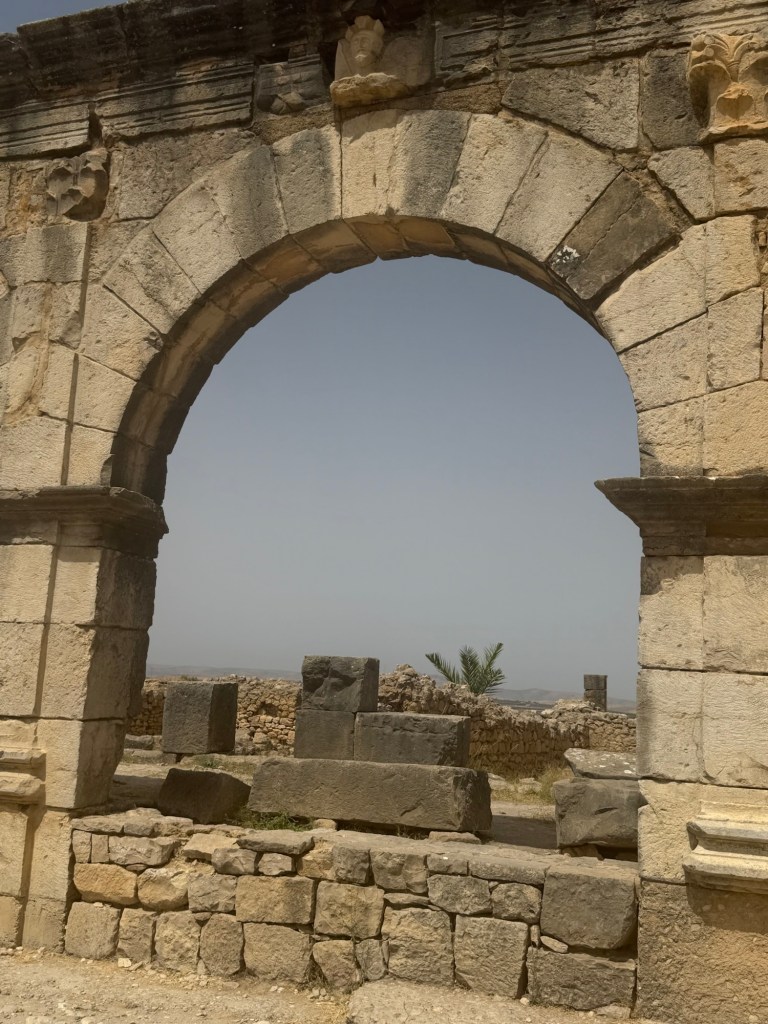
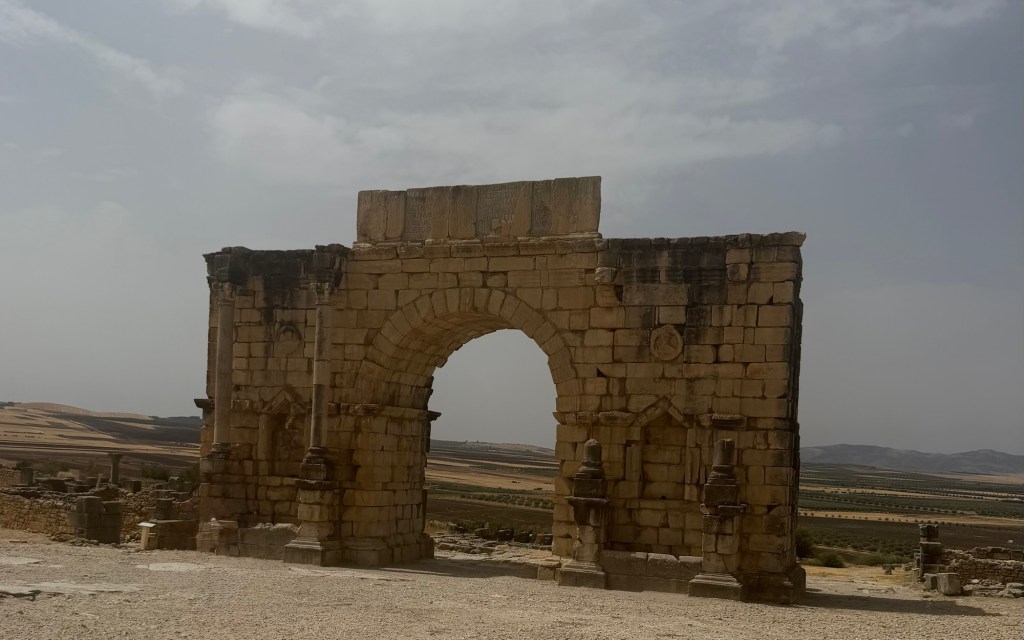
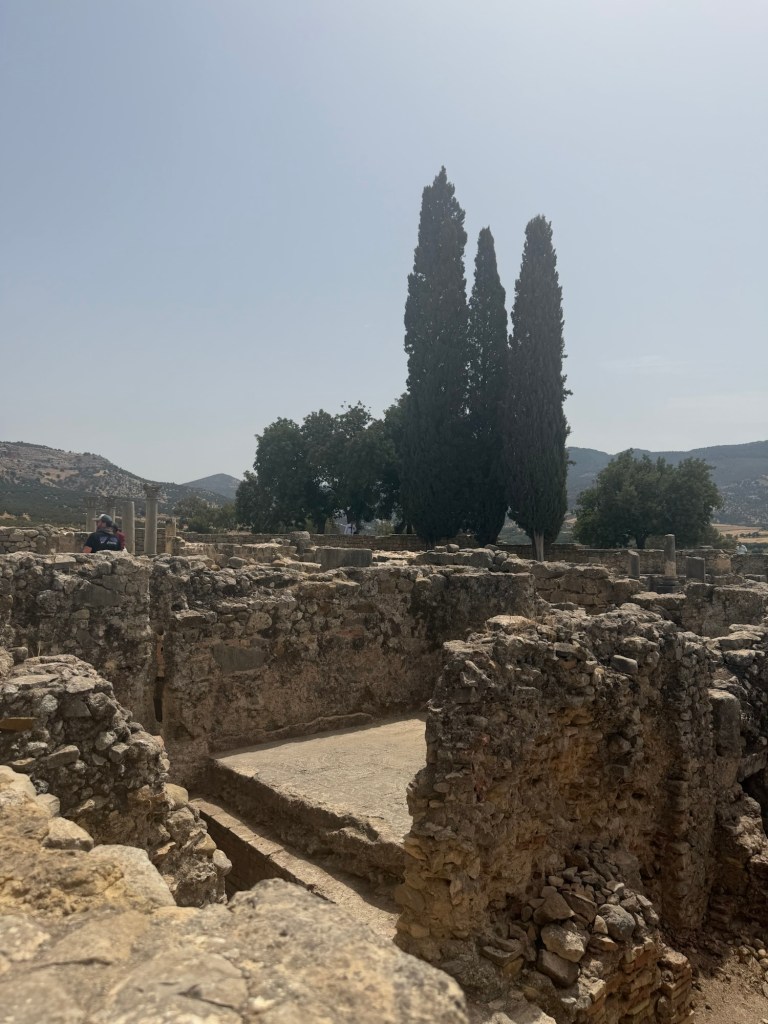
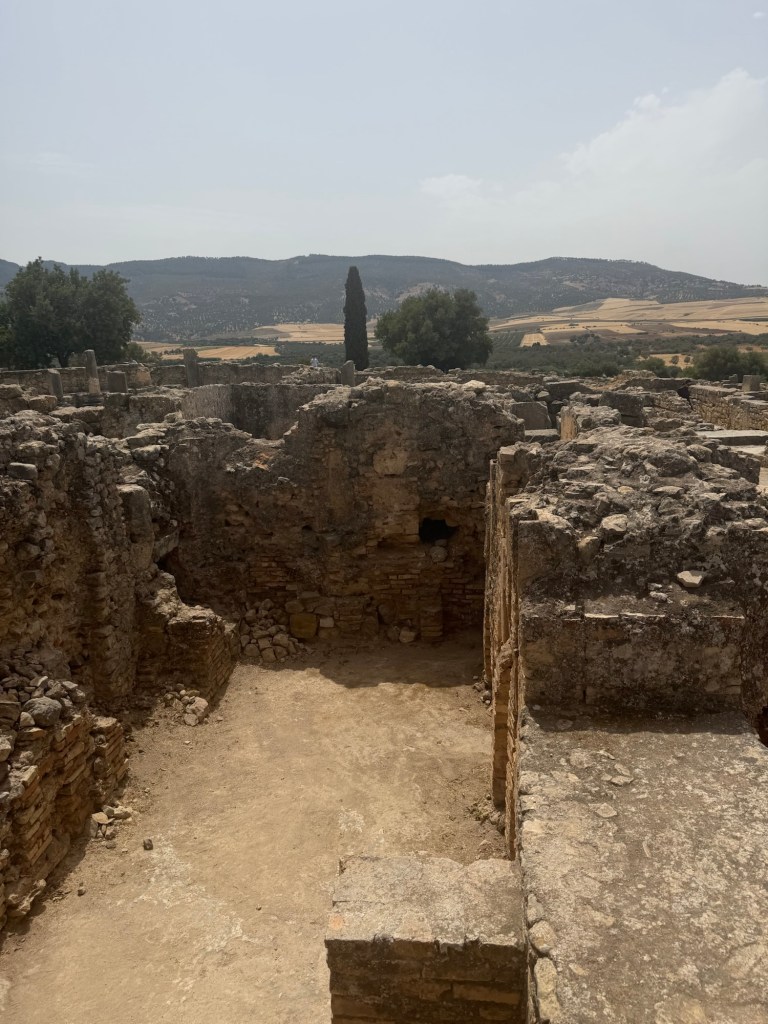
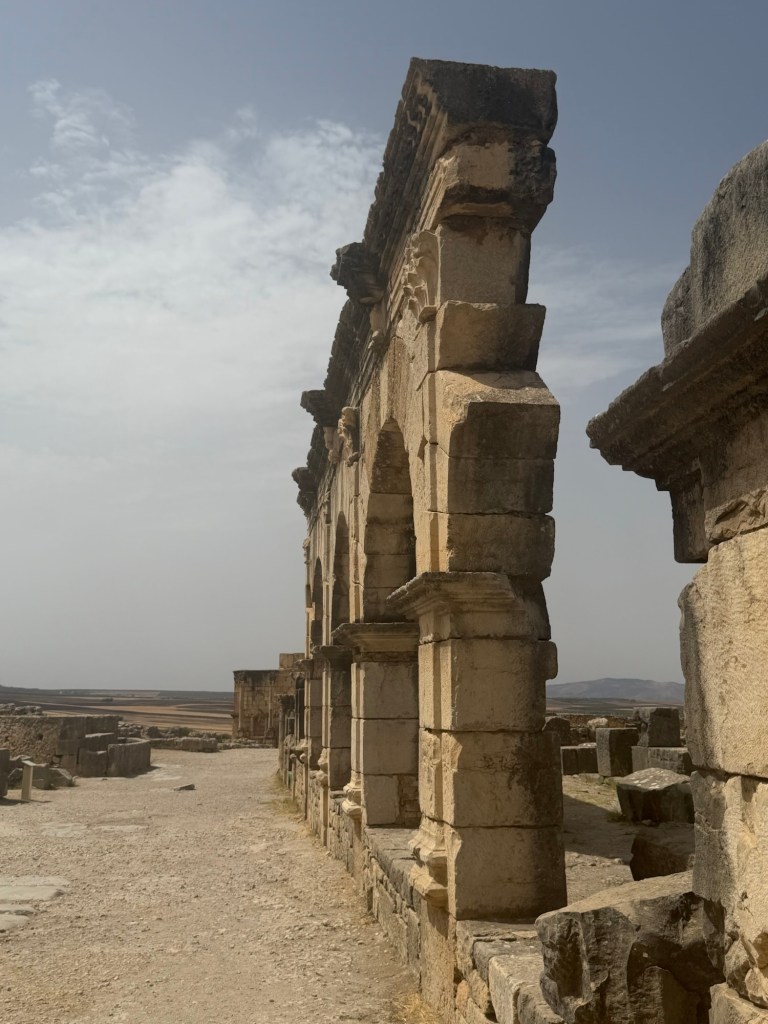
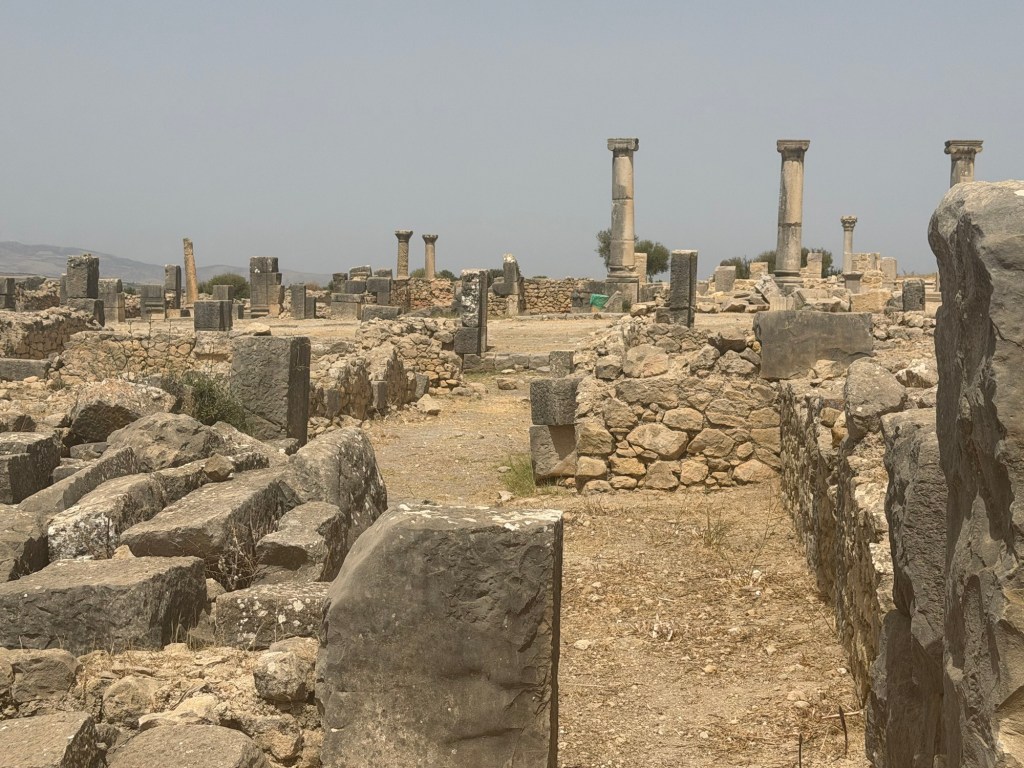
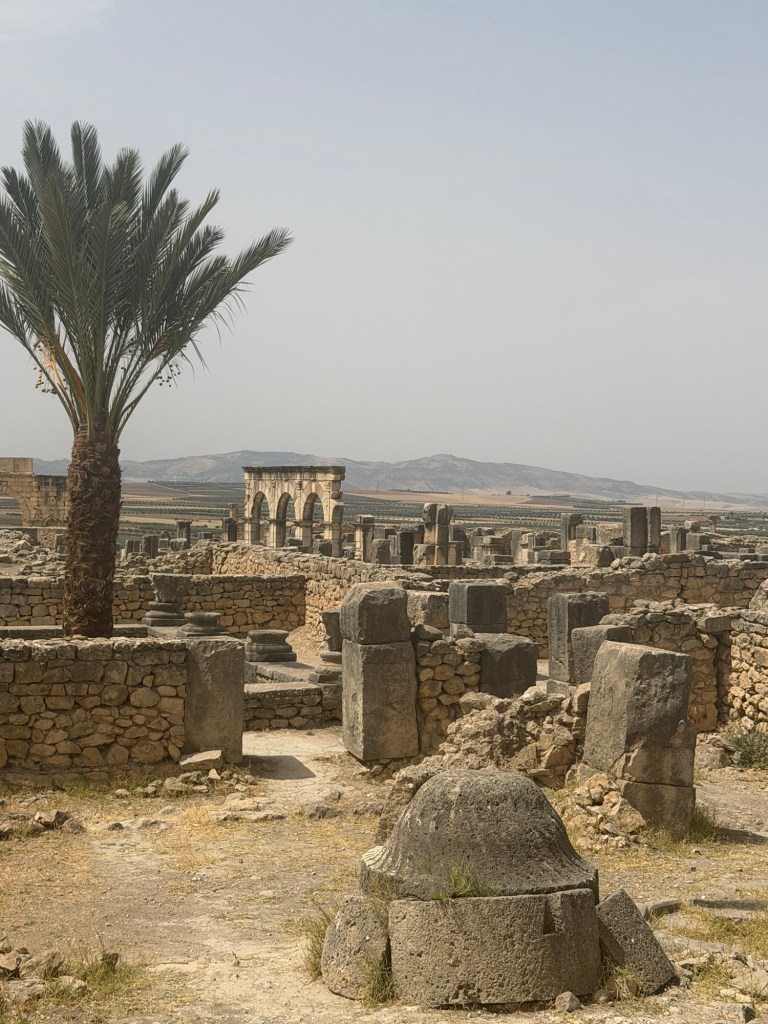
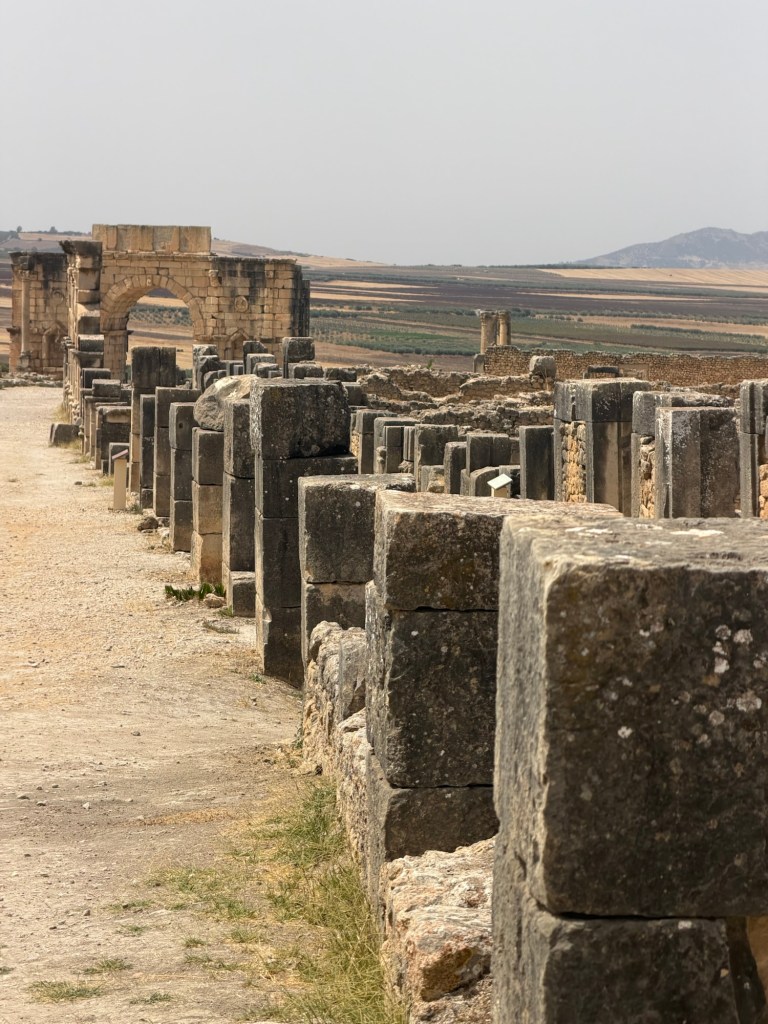
Goodbye Chefchaouen — next destination, Fez. En route: Volubilis, which began as a Carthaginian settlement in the 3rd century BC, before the Romans took over and building escalated. The name suggests a lifestyle of voluptuous proportions — something the Romans excelled at.
Whilst the examination of ancient ruins is not my most favoured activity, an excavated city of this size is extraordinary. Volubilis continues to reveal secrets about the lives of its inhabitants, including tales of the nobility’s obsession with gluttony before simply starting all over again. This is a remarkable archaeological monument, preserved for future generations while still offering keen archaeologists the opportunity to add to its ongoing and fascinating history. One of the many UNESCO World Heritage Sites to be explored and admired in Morocco.
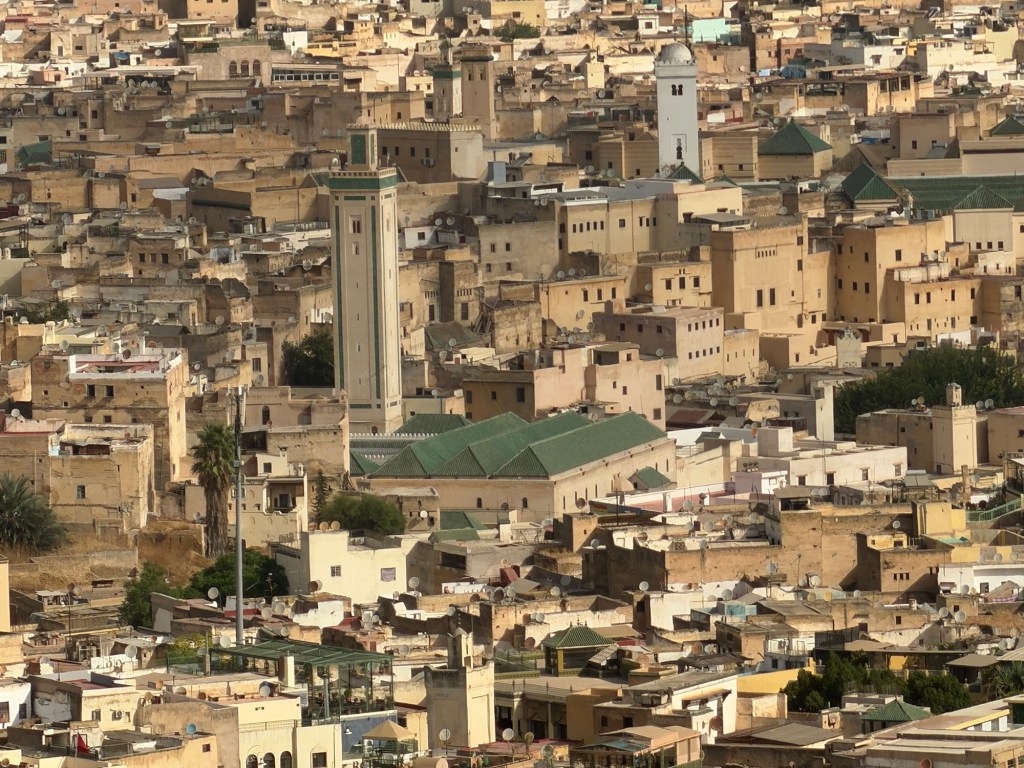
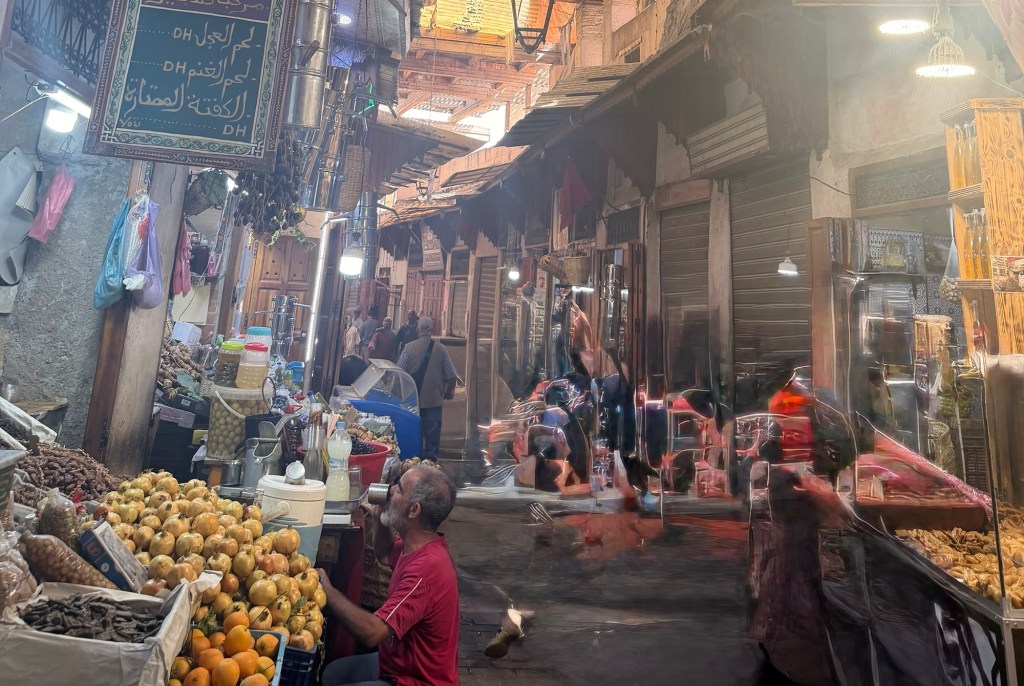
On to Fez, home to the world-famous Medina and its 9,000 streets. One could spend days here exploring — and, in the blink of an eye, become hopelessly lost. Yousef was at pains to point out that we were privileged to be in the hands of the guide of guides — the smooth-talking, extraordinarily knowledgeable Khalif. Only approved guides can take groups through the World Heritage-listed Medina. He had apparently had Madonna and her entourage on his résumé at one time. Therein lies a tale.
Khalif knows everything there is to know about the city of Fez and its history, imparting this knowledge as we traversed the Medina at breakneck speed. He would pause once we were well and truly embedded in a fondouk — one of the old merchant inns.
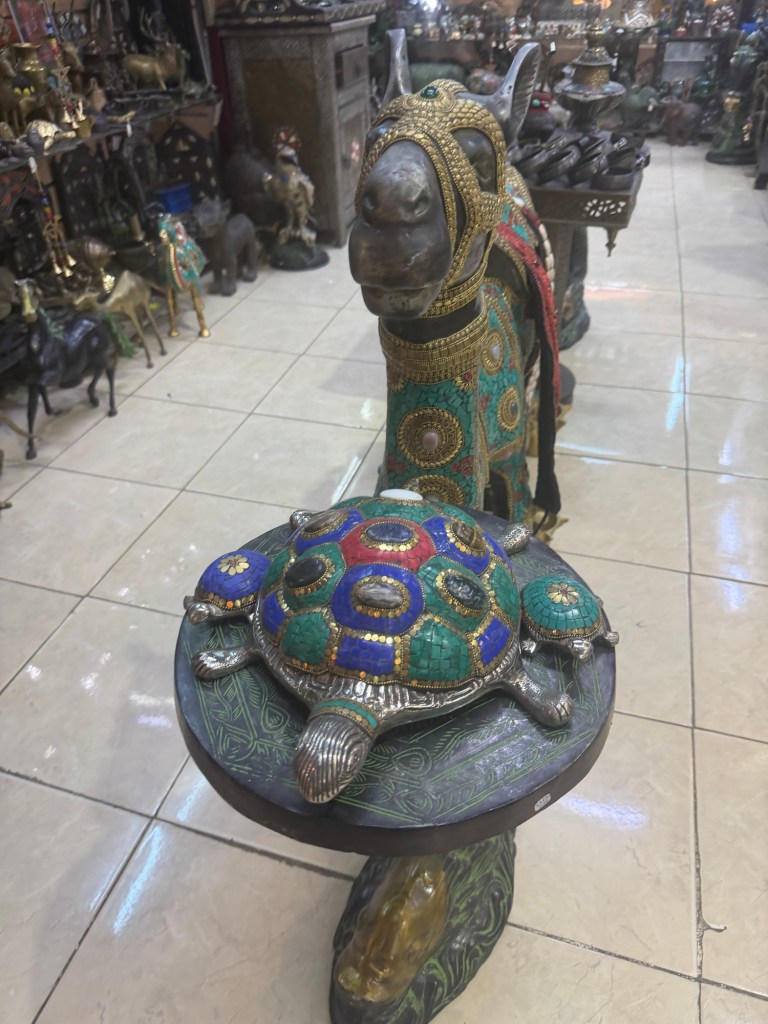
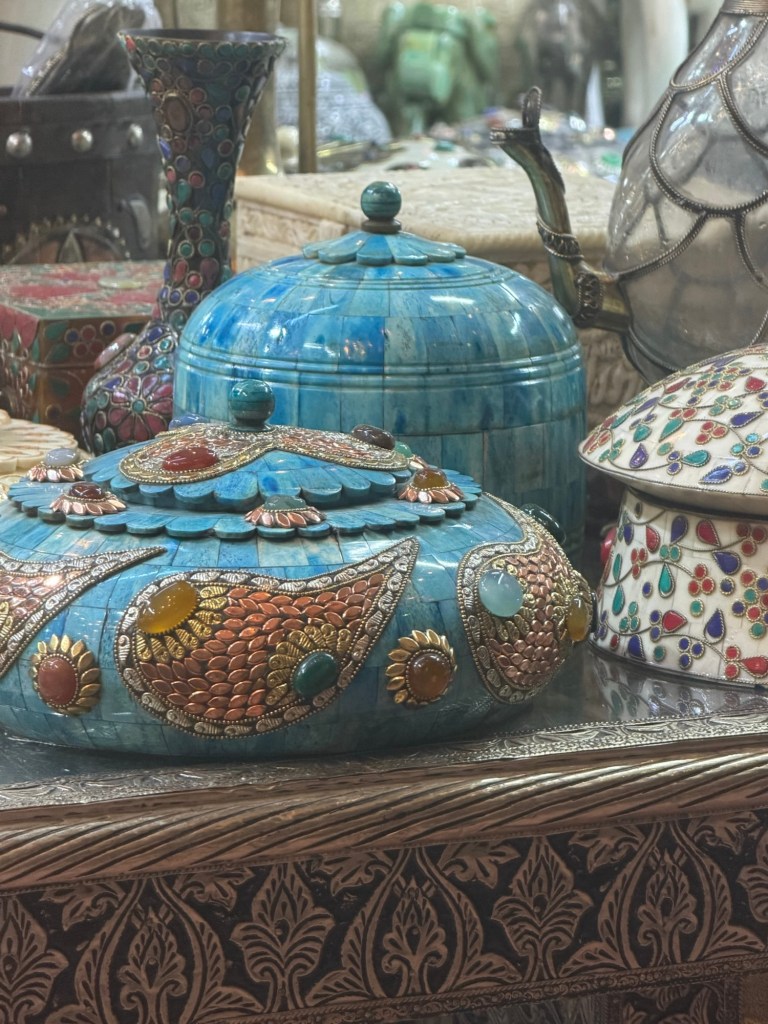
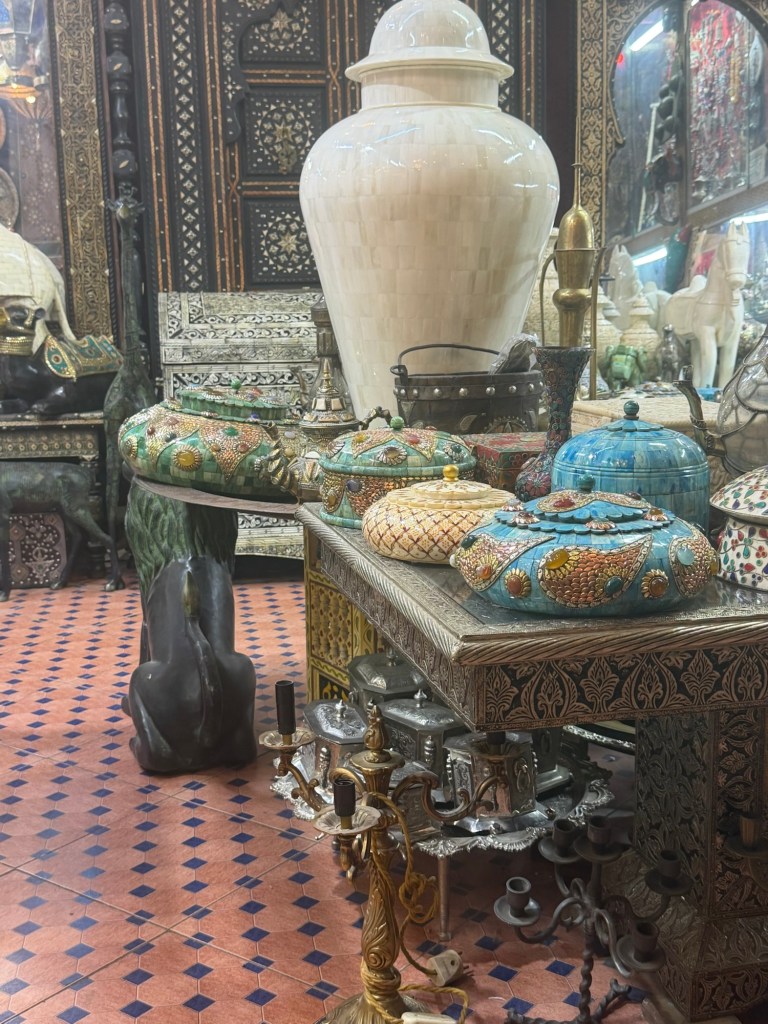
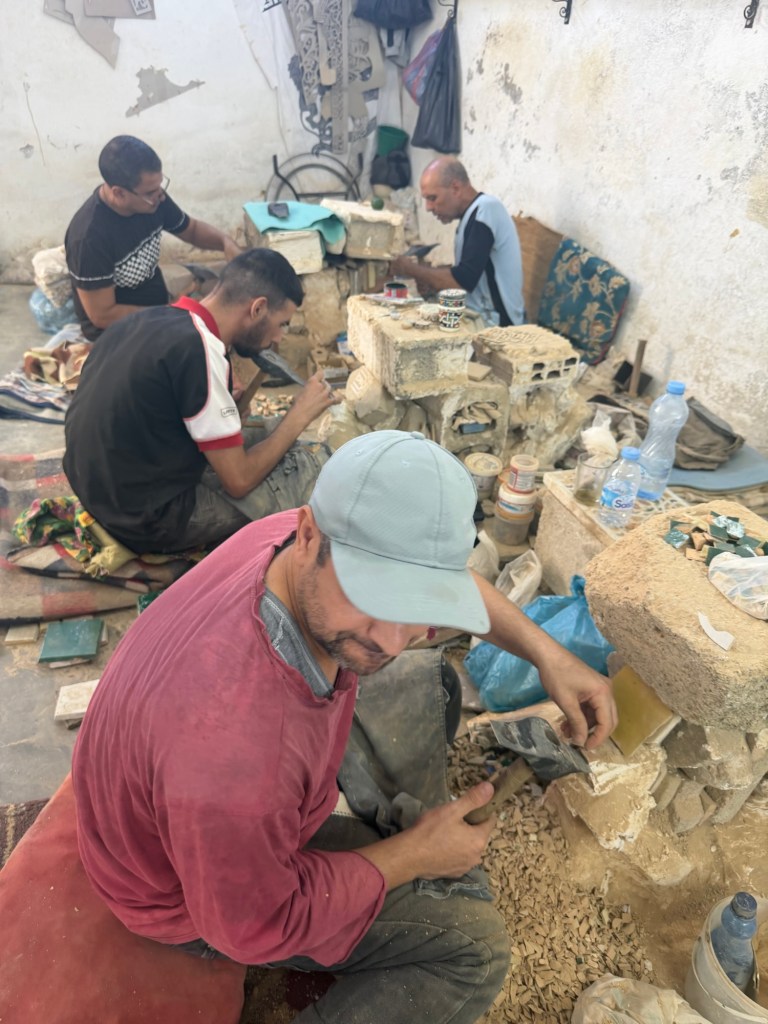
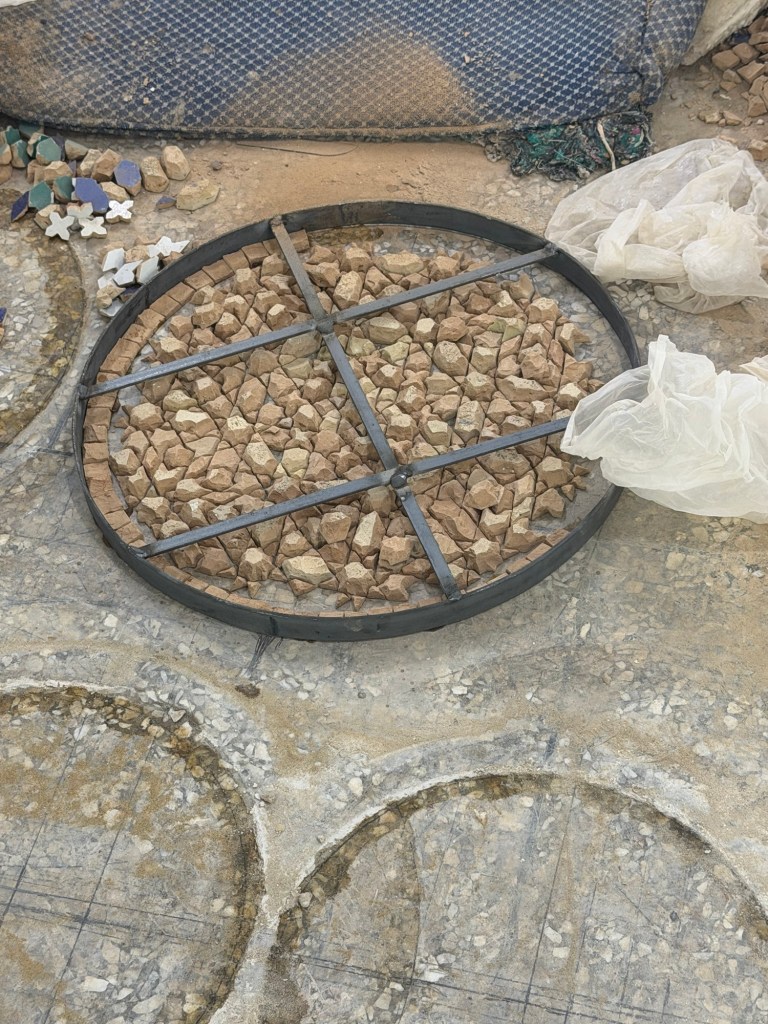
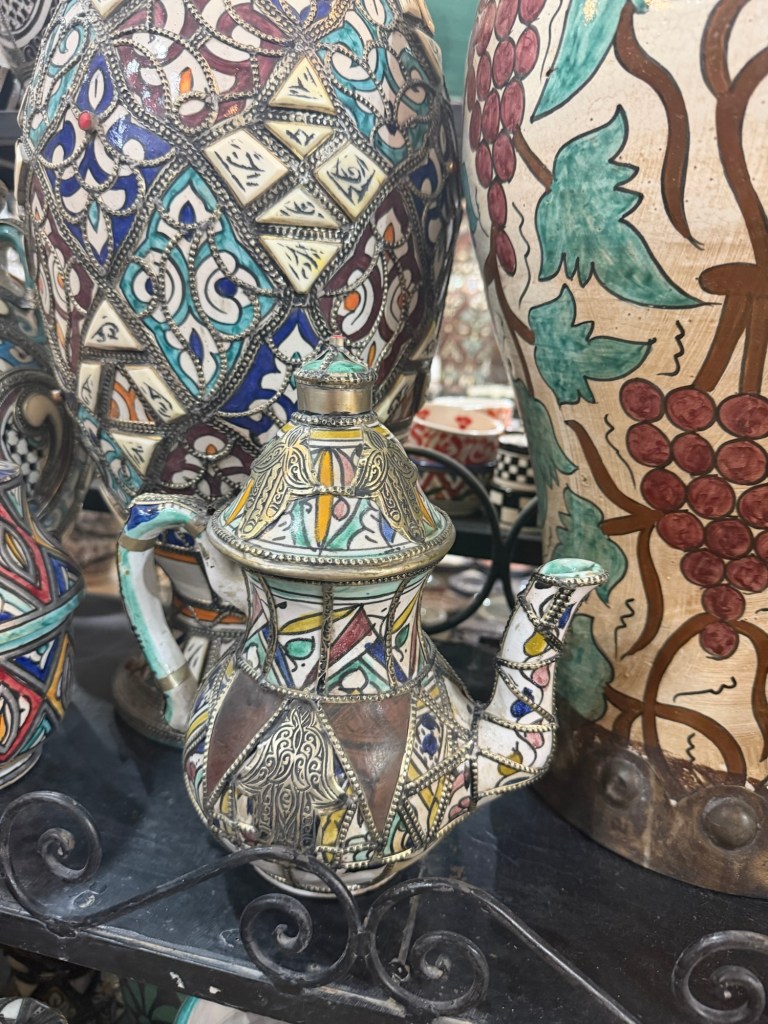
First was pottery and the iconic mosaic tiles. We thoroughly enjoyed the demonstrations — the legacy of thousands of years of craftsmanship. There was no escaping the mandatory gift shop and the equally mandatory attendant following us around like a bad smell. If I had a lazy $100K, I would happily have claimed a fantastic fountain created with artisan mosaic tiles.
The moment I expressed even the slightest interest, I was being followed from room to room. The first fountain I priced was roughly AU$11,000 without shipping, followed by another — smaller — at AU$6,000, also without shipping. Unfortunately, I was going to have to cross those off my list.
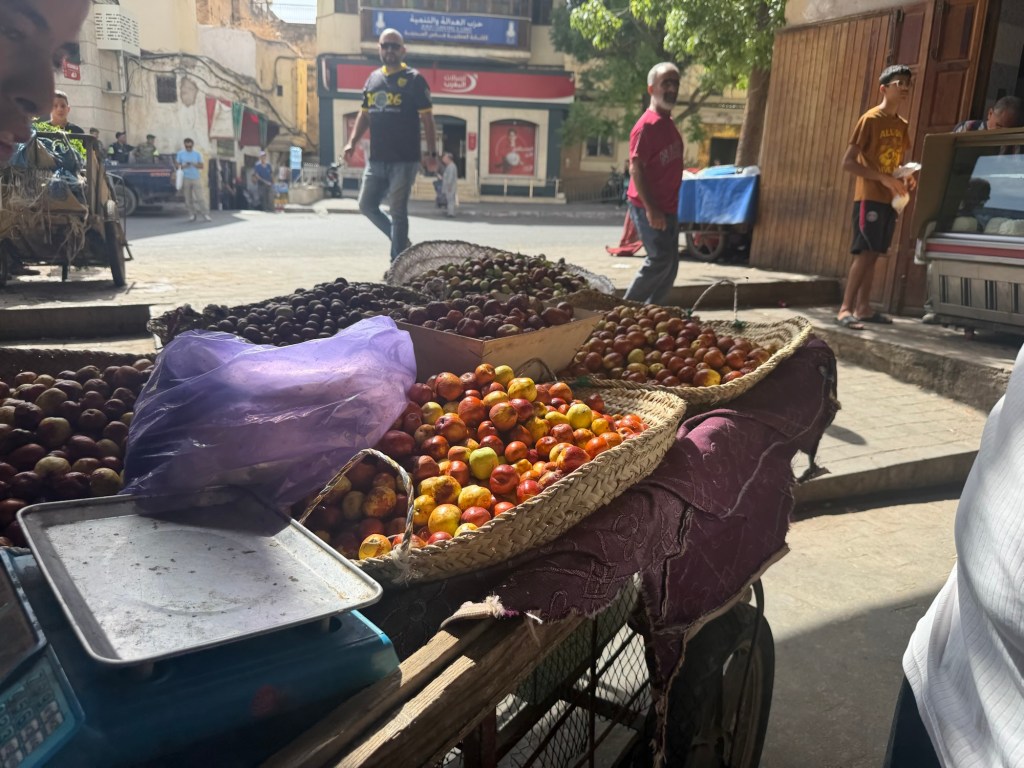
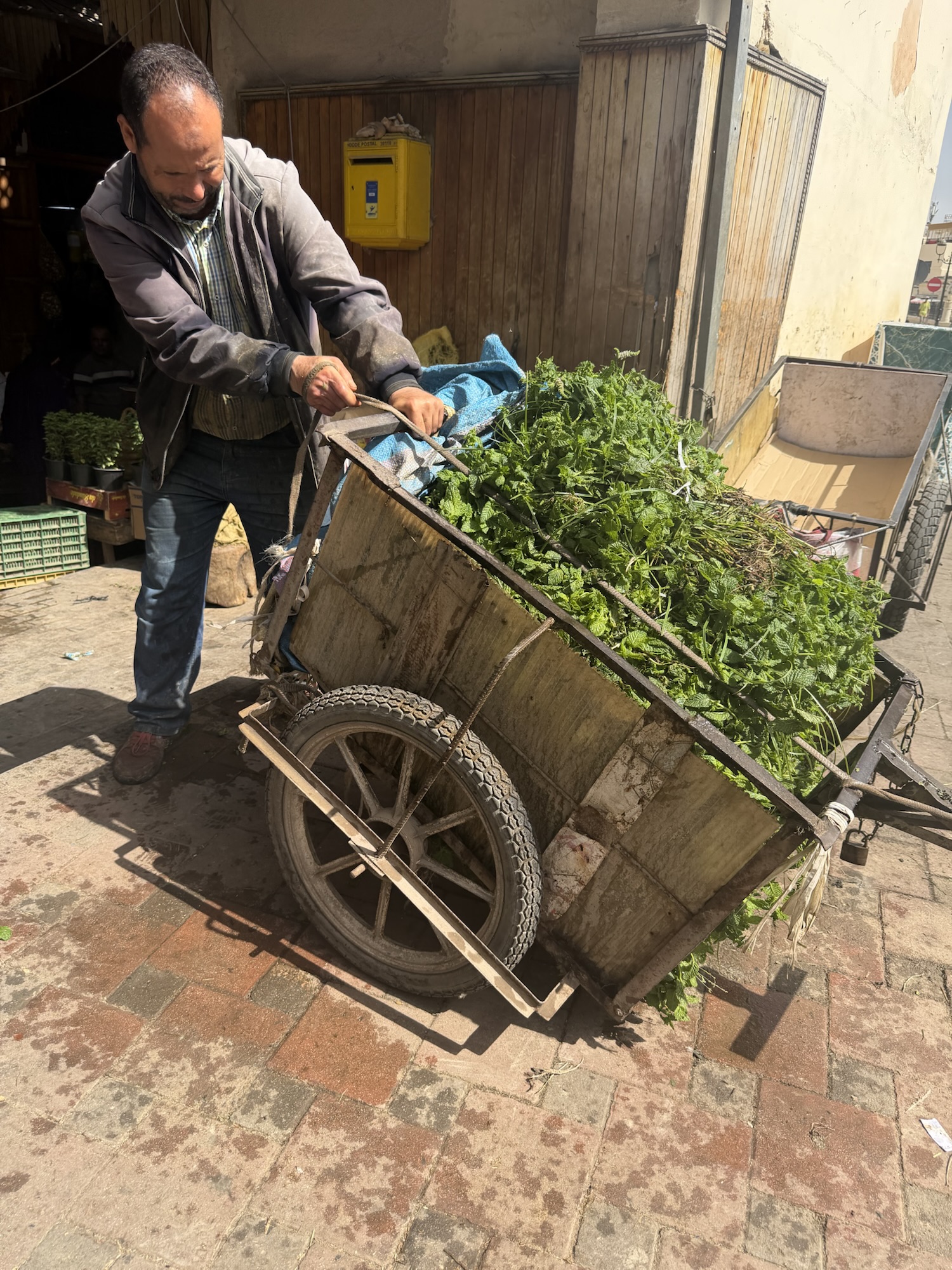
Meanwhile, Khalif was no doubt clocking up commission wherever we stopped and made purchases. We were handed a bunch of mint as we neared the tannery. Given my compromised sense of smell, the fact that I could smell it spoke volumes for its intensity.
We surveyed the iconic tannery, with its dye vats still occupying pride of place in the heart of the Medina. The process of dyeing, and the work involved in the tannery, is an ancient skill passed down for generations from father to son. I wondered about those intergenerational traditions — and about what, if any, workplace safety practices exist. They work in what seems to be an environmental open-air cesspool, with absolutely no protection that I could see.
However, once our mandatory photo-taking time was up, it was off to — you guessed it — the leather shop. Multiple levels bursting with every type of leather creation imaginable. Since this was an “official” outlet, the customer is encouraged to accept the price. A misconception, as Dakota cheerfully entered into meaningful negotiations while checking an impressive range of items off his shopping list.
I made do with a cute pair of classic Moroccan slippers, similar to those my good friend Rick also loves. I don’t think I bothered to haggle. It really is a tedious business, and at best you might achieve a saving of not very much.
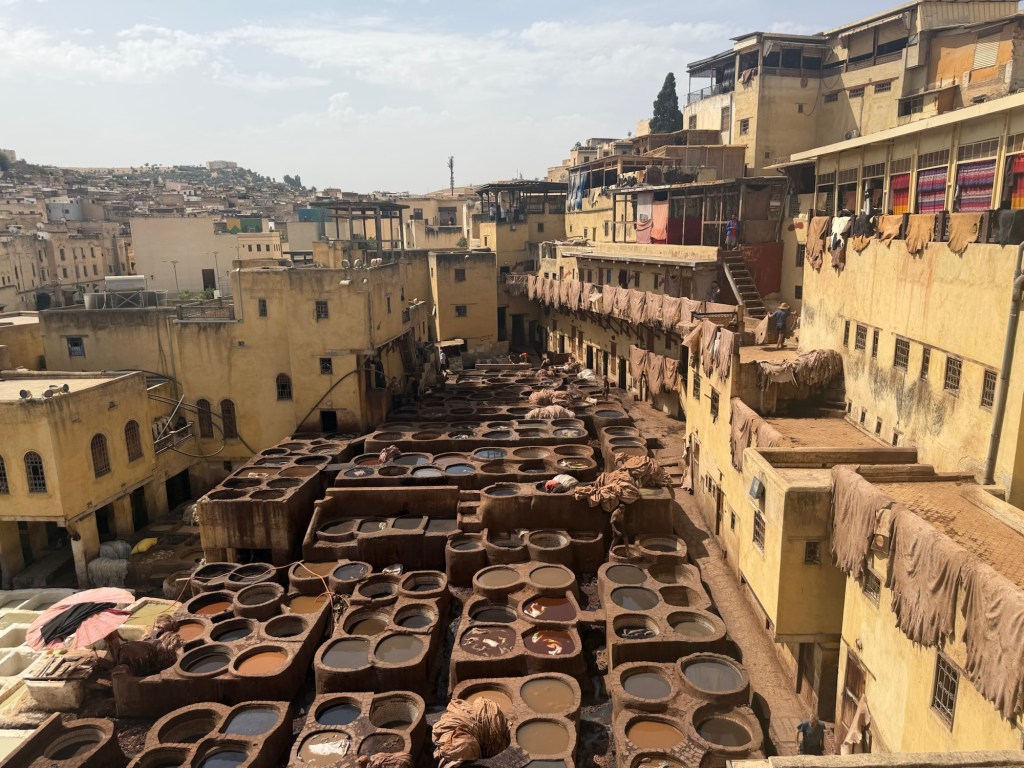
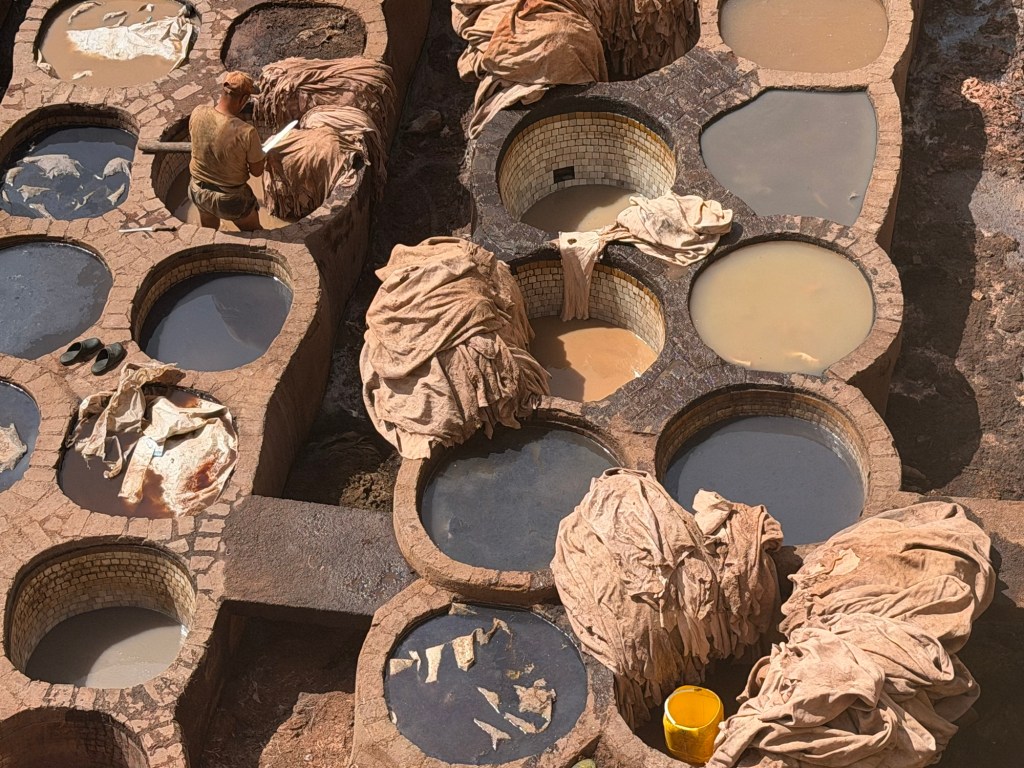
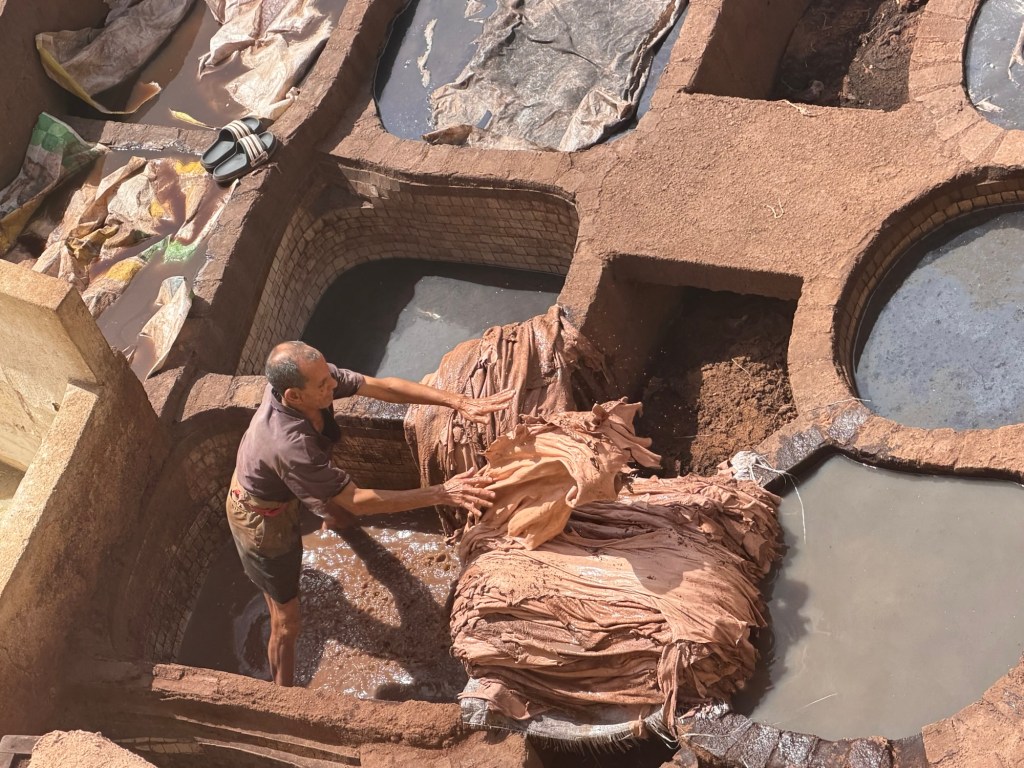
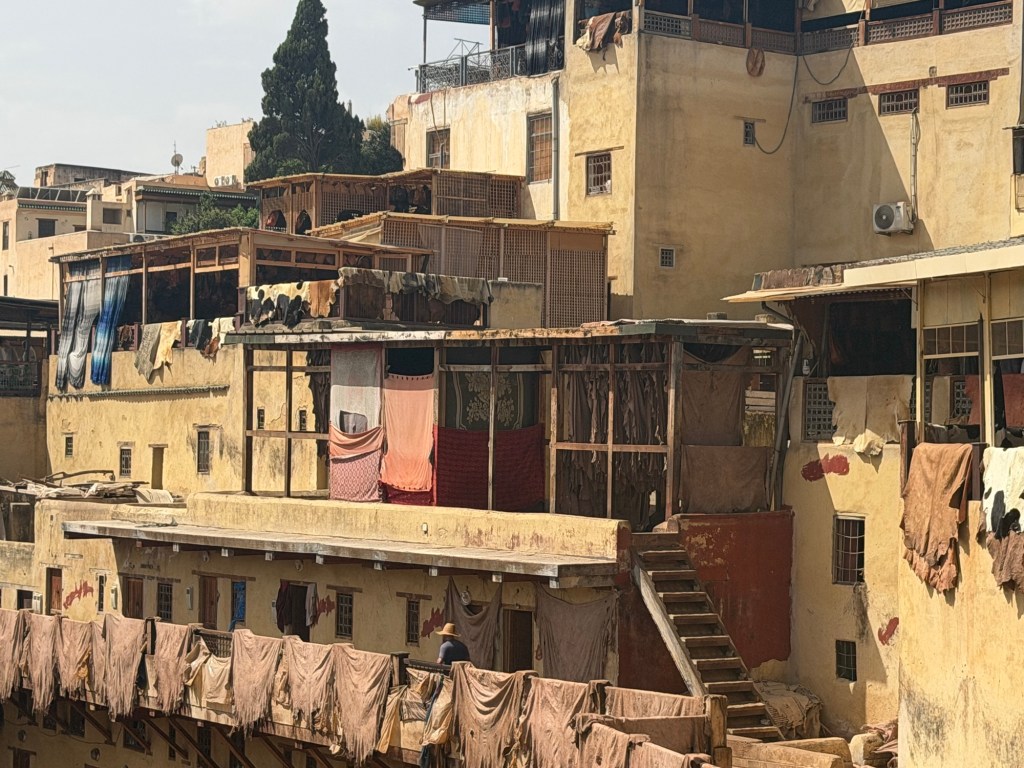
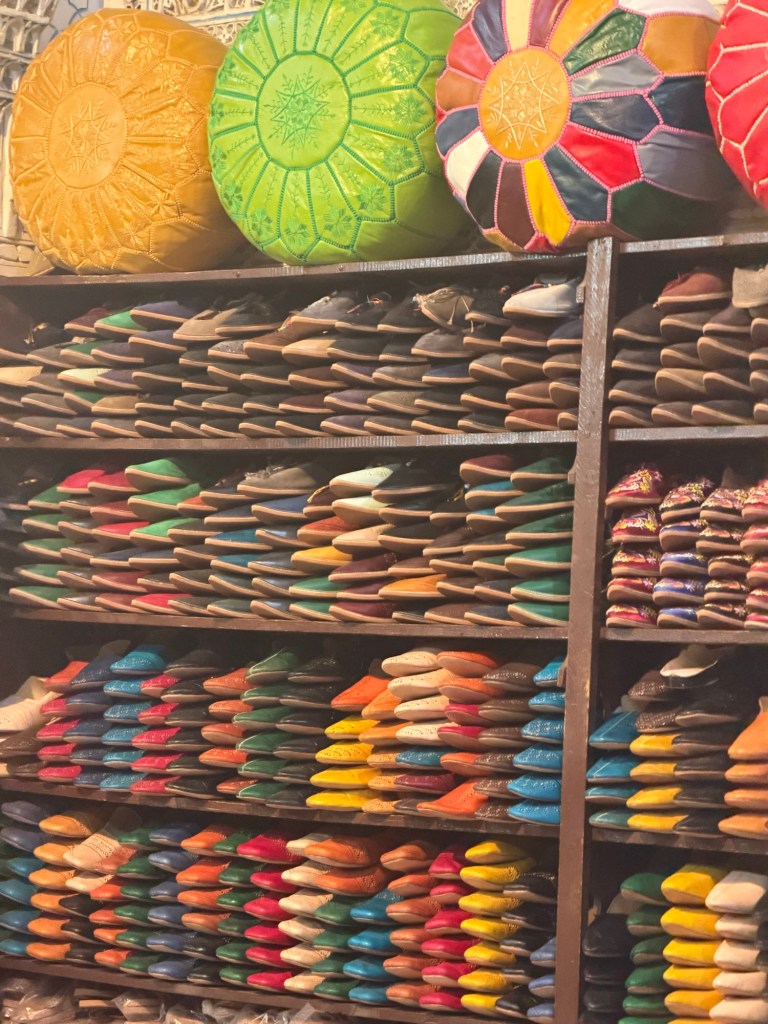
A guided Medina tour rules out stopping and browsing. At that point on our itinerary, medinas were still very much a novelty — even one with 9,000 streets. The possibility of becoming lost loomed large.
However, it did not take a 9,000-street Medina to lose myself in Fez.
Read on.
On a couple of occasions, Khalif stopped long enough to impart some of his impressive knowledge about daily life when the Medina was all there was of Fez — the souks, the mosques and the madrasas.
Fez is home to the world’s oldest university — the University of al-Qarawiyyin, founded in 859 AD by a woman, no less: Fatima al-Fihri. It is still in operation today.
Amazing.
Khalif on madrasas — schools:
“So, the teacher normally is sitting here on a chair, and then in front of him, his group of students that are sitting on the floor. Of course, the system was dictating, and then the student write on wooden boards, and then they memorised the lesson, and then tomorrow morning, before moving to the second part, they have to recite it.
“And then the average was three mistakes. So if the student recited and answered questions with fewer than three mistakes, he can just go to the fountain over there and wash his tablet, which was written on in ink. And then if he does more than three mistakes, he’d have to spend another day revising.
“So they come to the high school when they’re eight, and then it’s six years, which is fourteen. And at the time when they go to the university, fourteen. And people say that they are young, and you should forget today, and then think of the past, because in the past time, fourteen years old, some of them are already married.”
Fascinating stuff!
Time for my account of a situation involving myself which could have gone horribly wrong.
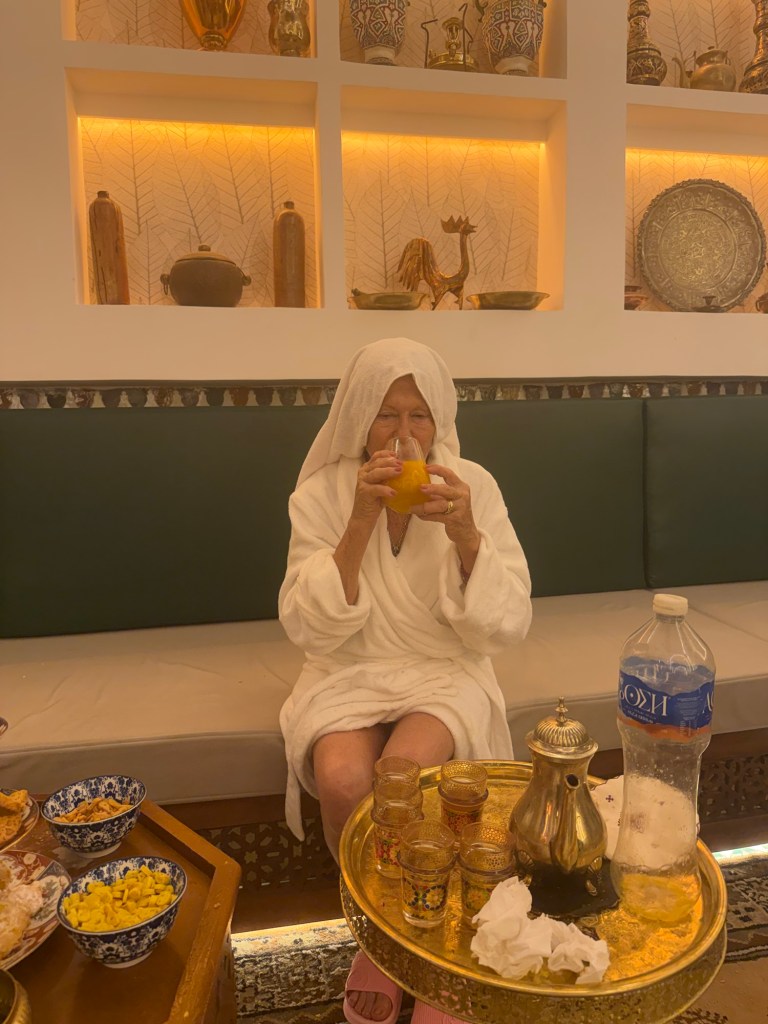
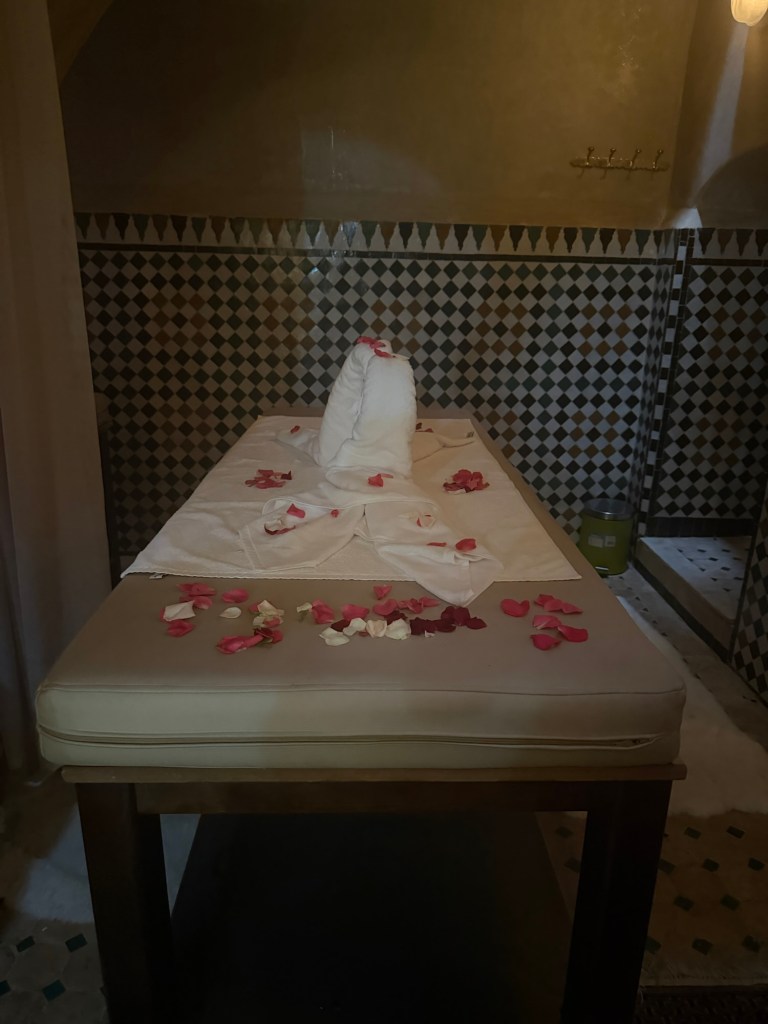
The event unfolded on the afternoon of that hectic day spent keeping up with Khalif in the old Medina, lunching and spending money. I had made an appointment later that evening for a hammam at the newly renovated Medina Spa, which had only been open for a week. No doubt Khalif would be pocketing a kickback from my 500 dirham.
The salon service involved a free transfer to and from the hotel. A couple of hours beforehand, back at the forgettable hotel with the random name, I needed a reliable ATM — cash rules in Morocco. I also needed a pharmacy. A badly infected finger required antibiotic powder.
The plan was simple: walk to the nearest reliable ATM and then, from there, to a pharmacy across the road from the hotel.
I found the ATM, extracted some money and headed back.
This is where things went pear-shaped.
In need of a Khalif debrief, I decided to stroll a couple of blocks past the hotel and see what was around the corner. It was only when I turned to come back and sought GPS reassurance that the horrible reality dawned.
My phone was as dead as the proverbial dodo.
I still can’t believe how incredibly stupid I was to have let this happen. The culprit — a squillion photos captured while hotfooting around the Medina.
No phone meant no watch, no GPS and no access to Find My.
And I did not know the name of the hotel.
I had clearly turned a street too early or too late. The streets were not parallel and the buildings were quite indistinguishable. It was obvious I needed a phone charger.
I also needed a toilet.
I tried a pharmacy with a lovely French-speaking proprietor. He tried so hard to help me, using a mixture of French for beginners — I really must revisit French — and sign language.
The toilet got a tick, thank goodness.
Alas, not the charger.
Why can’t Apple standardise chargers, regardless of the phone model?
We did our best to locate my hotel on his phone’s map. I knew there was the distinctive tower of a very large mosque and a Shell service station close to it at the end of the street. After a lot of mucking around and confusion, I thought I had a direction.
I thanked my newfound friend as warmly as I could. He had most certainly helped in the bathroom department — and he gave me some Band-Aids.
For my finger.
Despite having some sort of plan, I soon realised I wasn’t getting anywhere. There was also the nagging reminder in the back of my mind that being on your own in Fez at night was perhaps not advisable.
Running out of ideas, my next move was to head towards a high-traffic area where I assumed larger businesses would still be open. The side streets were looking increasingly uneasy.
Eventually I ended up on a main street, over the road from the Ramada Hotel.
Hallelujah!
The lovely English-speaking receptionist assured me there was no need for alarm. An embarrassing — I was beyond caring — explanation of my predicament was met with calm reassurance.
A compatible phone charger materialised and was duly connected, while she began scrolling through lists of hotels.
Identifying my hotel turned out not to be necessary.
The minute there was some charge in my phone, it went into meltdown, with Yussef, Dakota and, of course, Khalif on the line. Khalif had been ringing constantly since my spa transportation had raised the alarm.
First call was Dakota.
I told him I had found a much nicer hotel.
He told me to stay put.
They were on their way.
By this time, anxiety had been replaced by relief and humour. I thought I’d at least have time for a cool drink.
No sooner had I crossed reception, heading for the bar, than a car screeched to a halt outside with Dakota and Yousef hanging out the windows.
It was like a scene from a Chevy Chase movie — incongruous and downright funny.
I retrieved my phone, thanked the receptionist profusely and jumped in the car.
The Medina Spa driver had raised the alarm, so a joint rescue mission had ensued. Yusuf and Dakota were dropped at some place where Dakota later — apparently — got married four times, while I was whisked back to the old Medina for my second of three, and the best, hammam on tour.
I really got my money’s worth that night.
In more ways than one!